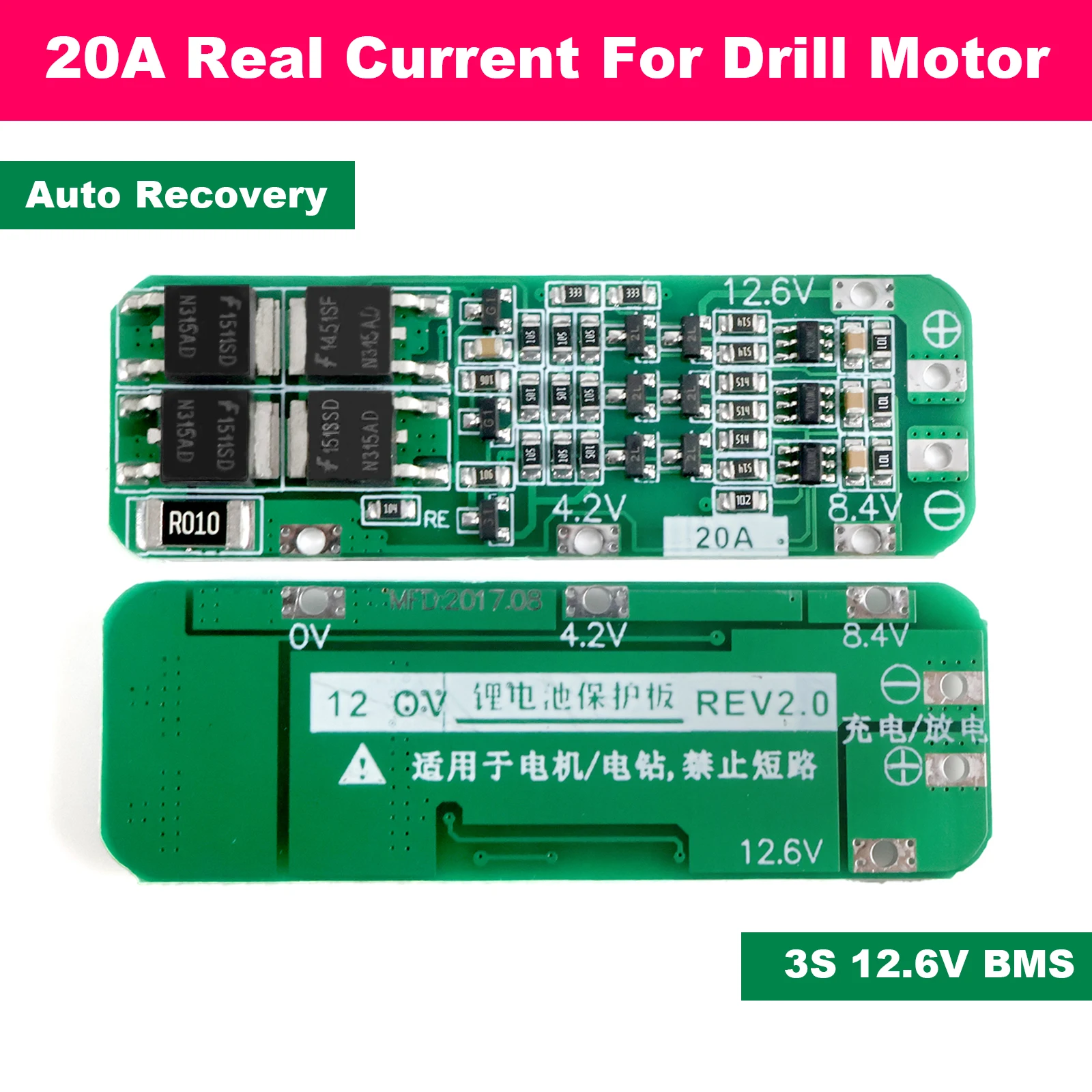
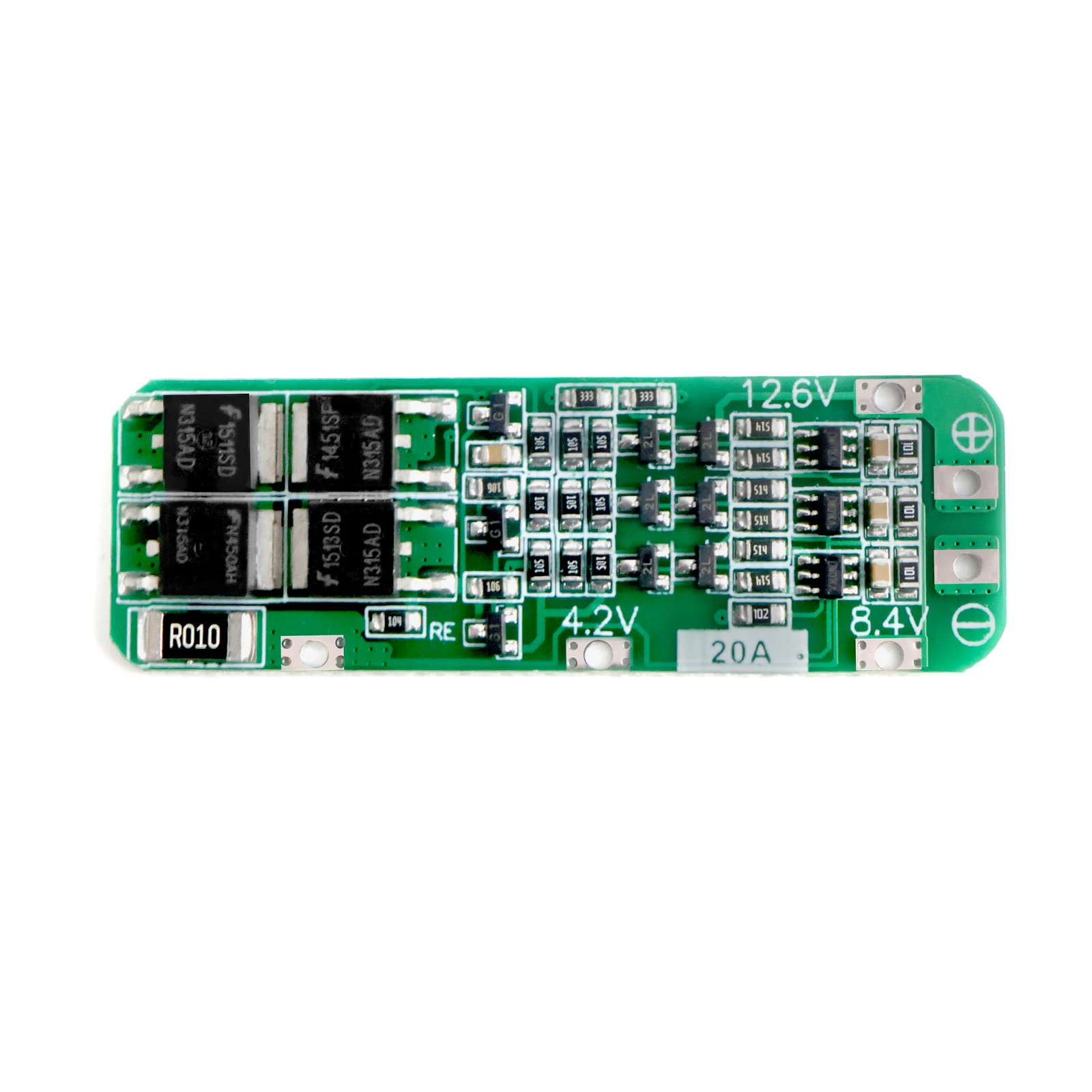
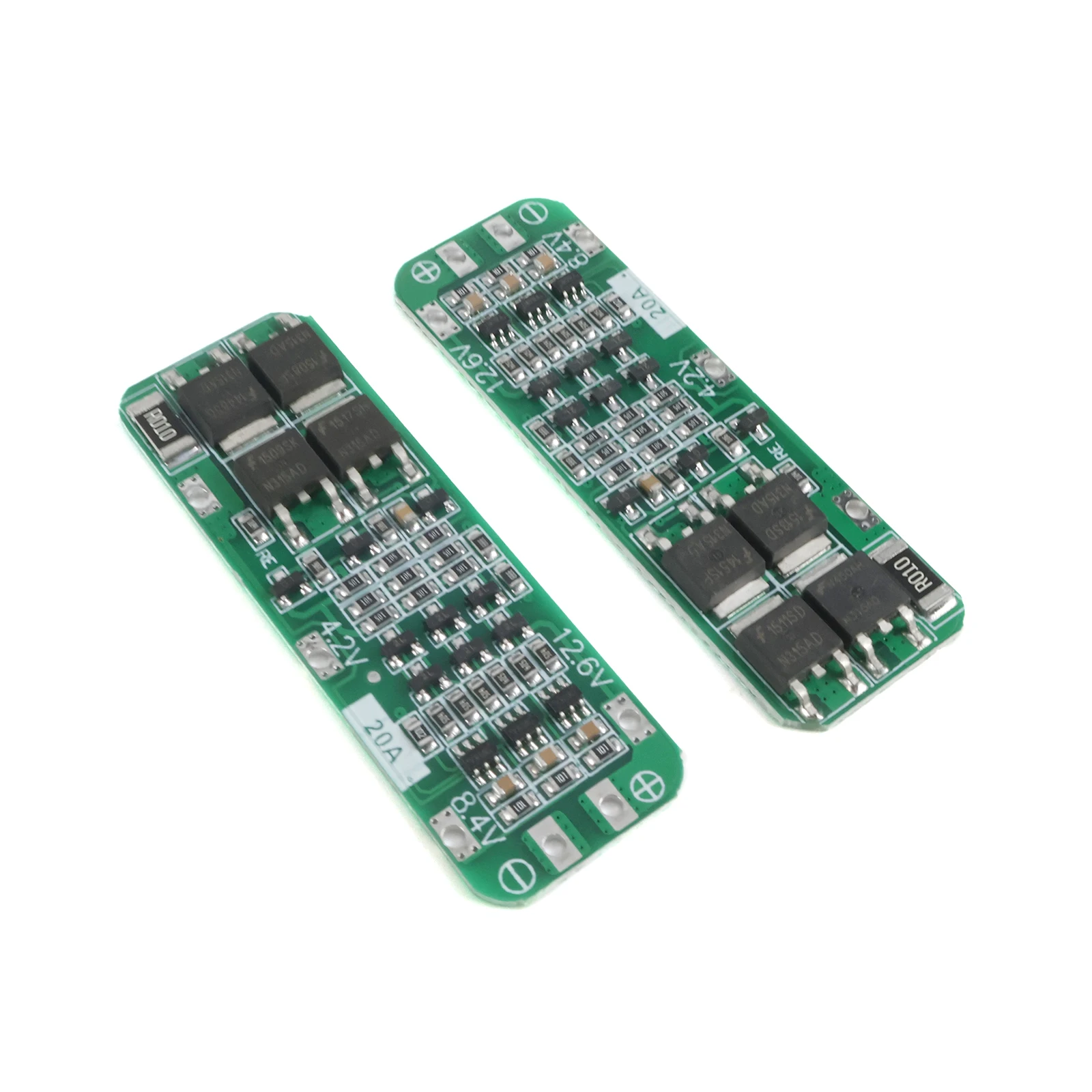
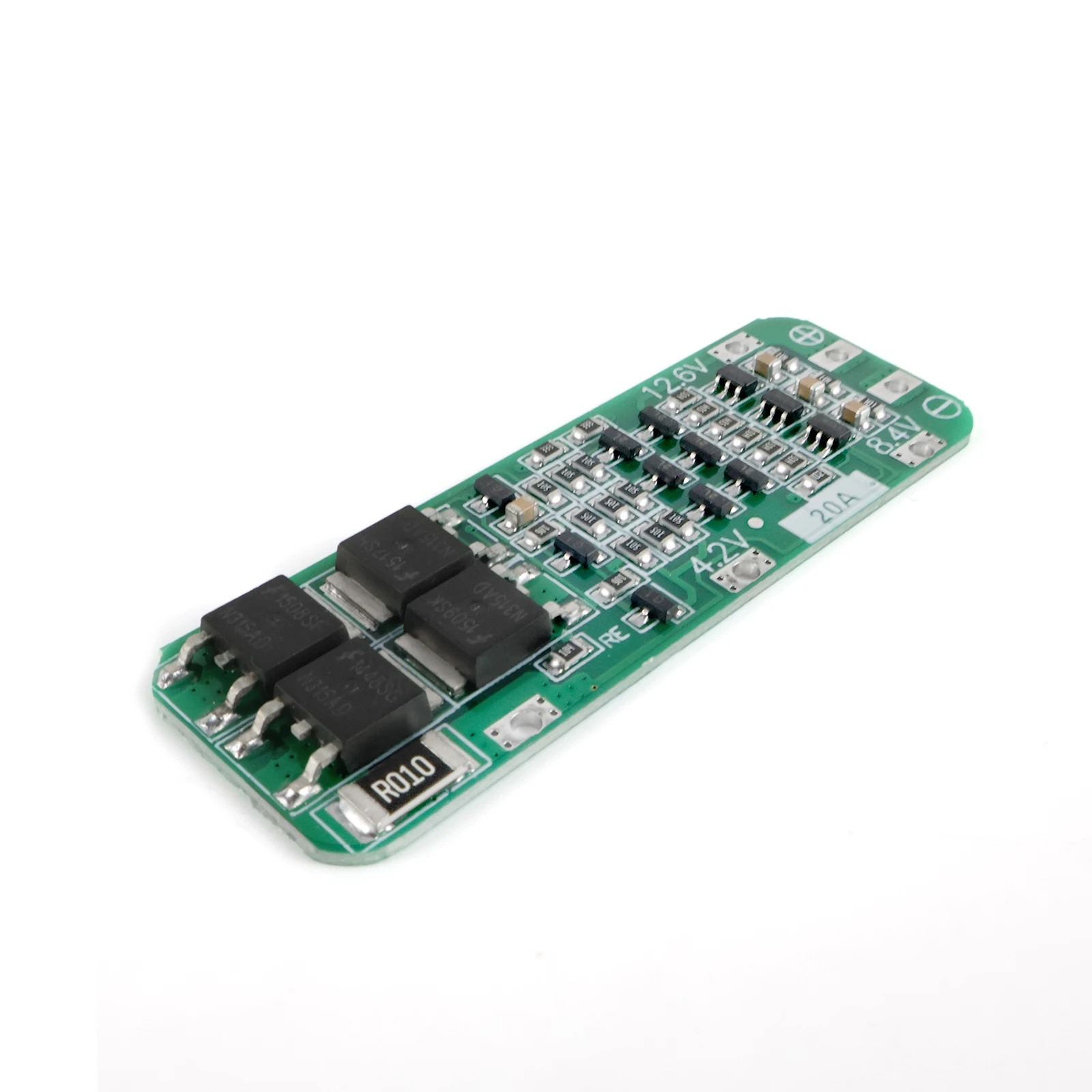
Description
🔋 20A Real Current – 3S 12.6V BMS for Drill, Auto Recovery, Overcharge & Overdischarge Protection
Key Features & Benefits
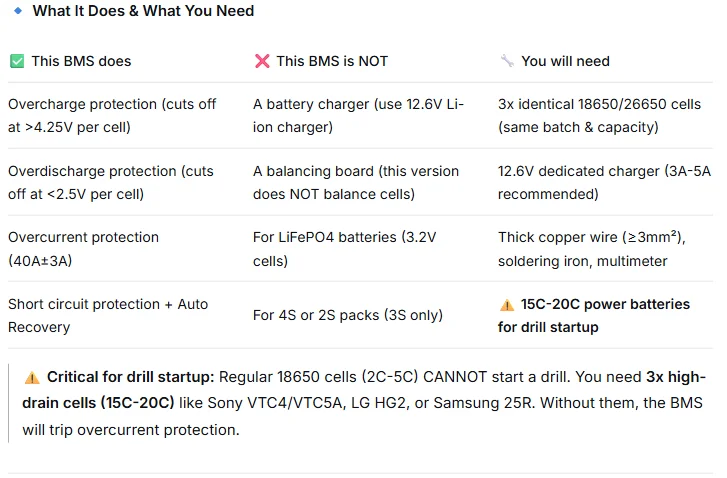
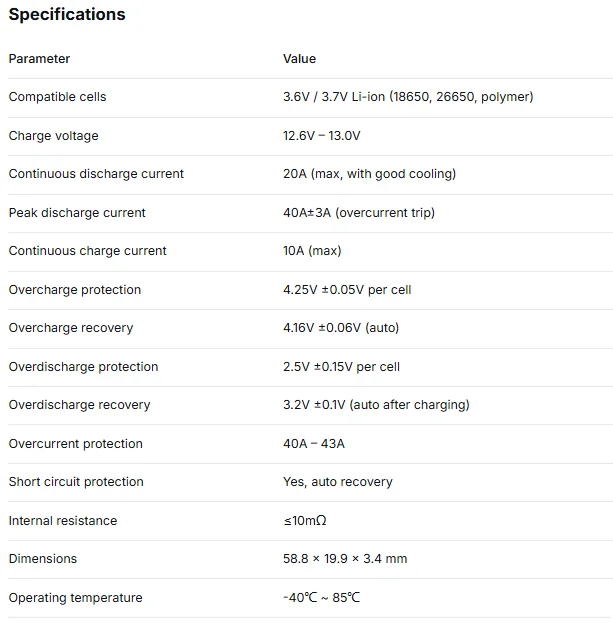
⚡ 20A Continuous Discharge (40A Peak): True 20A output for drills, motors, and high-power DIY tools – no more false specs.
🛡️ Full Protection Suite: Overcharge (>4.25V/cell cuts off), overdischarge (<2.5V/cell cuts off), overcurrent (40A±3A), and short circuit (<150ms) – extends battery life and keeps you safe.
🔄 Auto Recovery: After a fault clears (overcurrent or short circuit), the BMS automatically resumes output – no manual reset or charger needed.
🔋 3S Li-ion Support: Works with 18650, 26650, or polymer cells – perfect for 11.1V/12.6V battery packs.
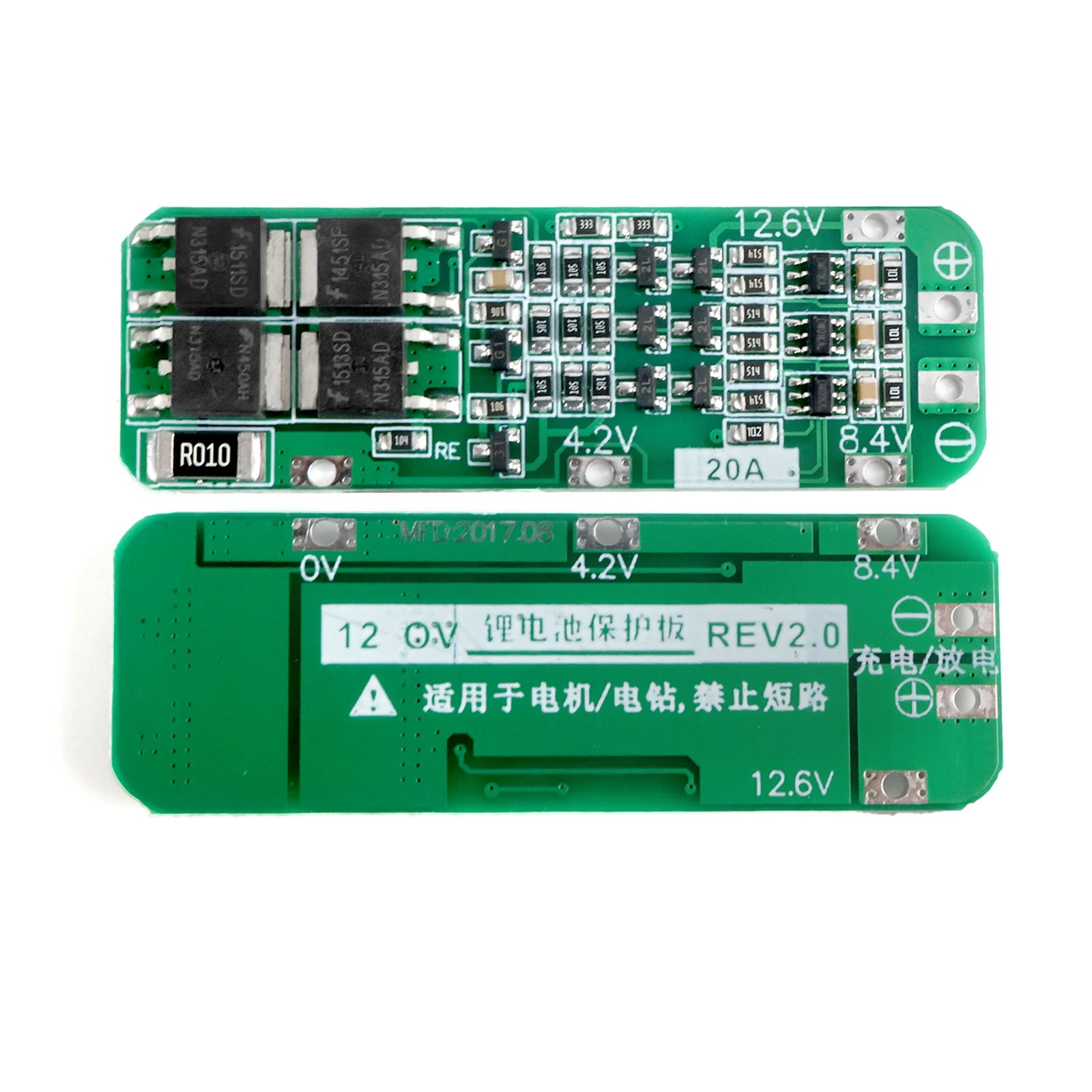
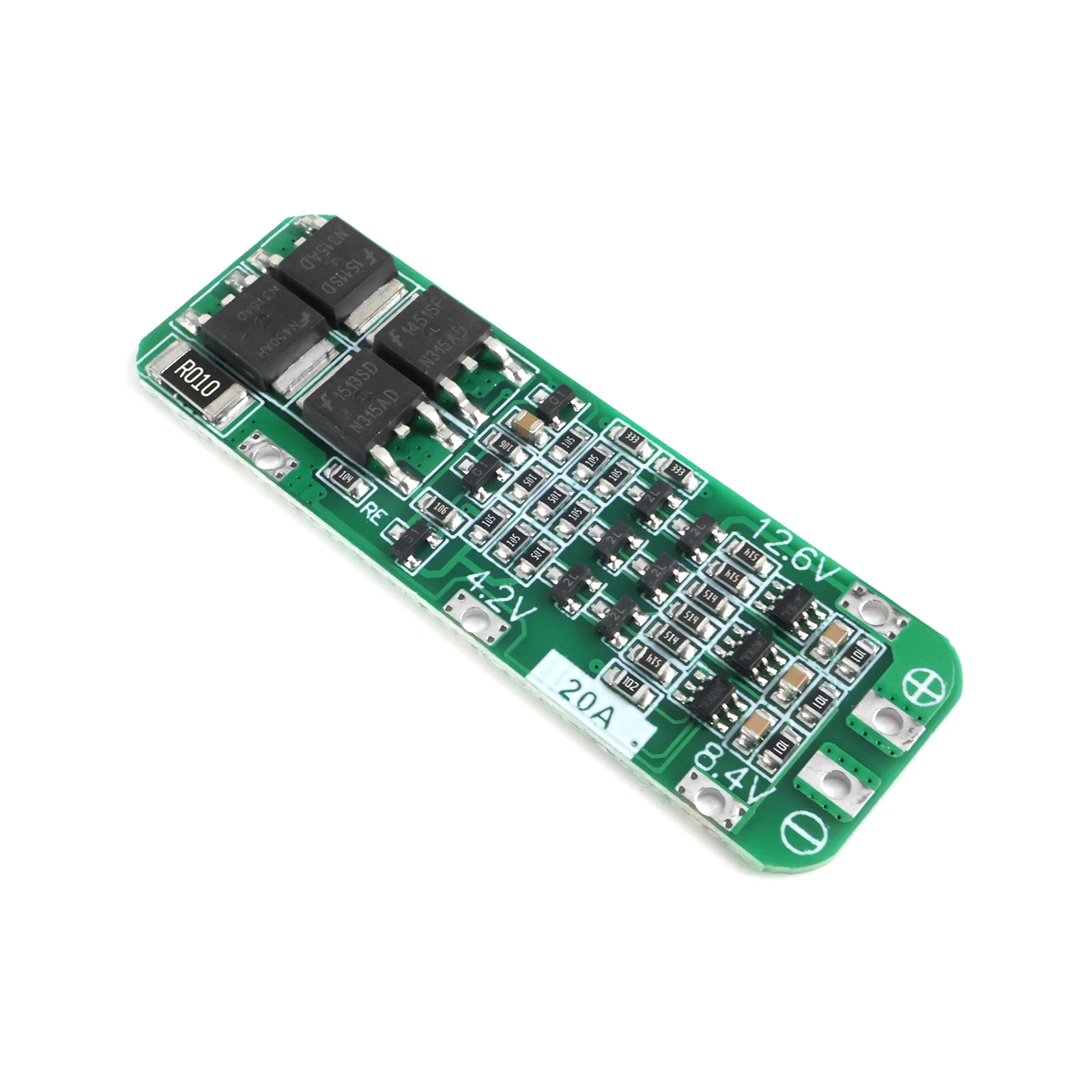
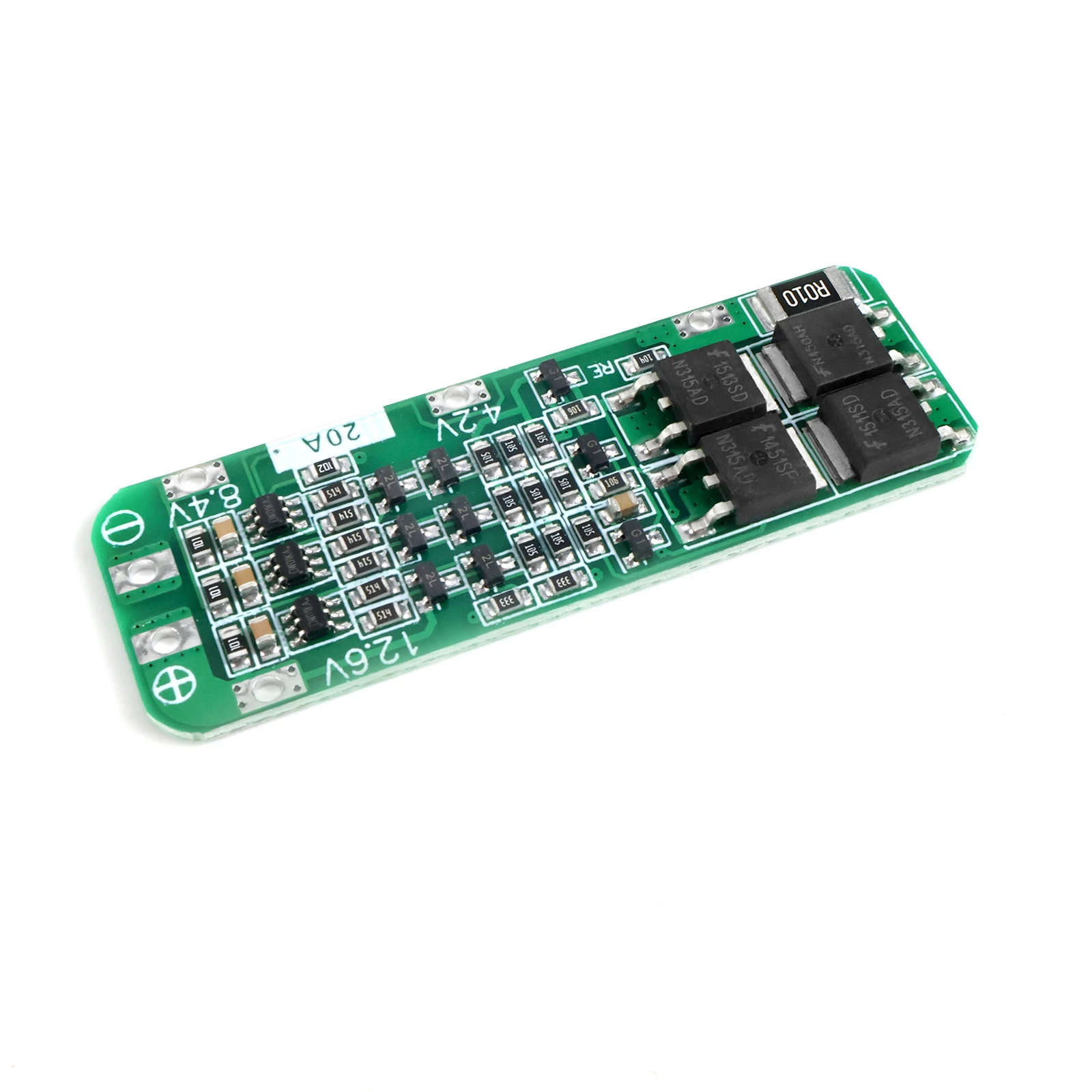
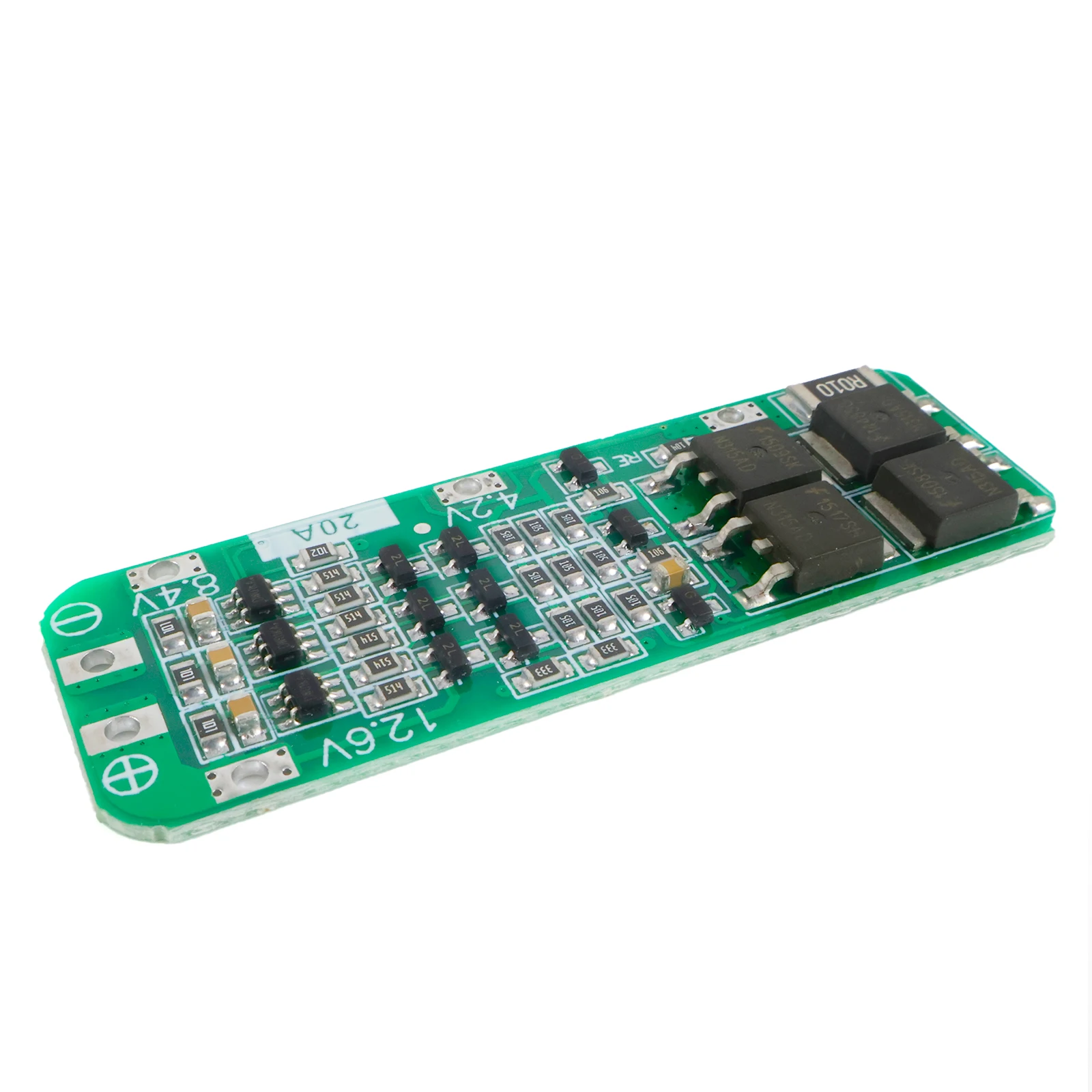
🛠️ DIY-Friendly: Clear solder pads (B-, B1, B2, B+, P-, P+) and compact size (58.8×19.9×3.4mm) – easy to integrate into custom battery packs.
❄️ Low Internal Resistance (≤10mΩ): Minimal heat generation and voltage drop – more power goes to your load.
Product Description
Upgrade your power tools to lithium-ion with confidence. This 3S 12.6V BMS is designed for 18650/26650 battery packs, delivering a genuine 20A continuous discharge – enough for drills, electric screwdrivers, small saws, and DIY inverters. It protects your batteries from overcharge, overdischarge, overcurrent, and short circuits. The Auto Recovery feature means no manual reset after a fault. Simply fix the issue (remove load or short), and the BMS restarts automatically. Whether you're a hobbyist or a repair shop, this board makes battery pack building safer and easier.
⚡ Quick Start Guide & Important Tips
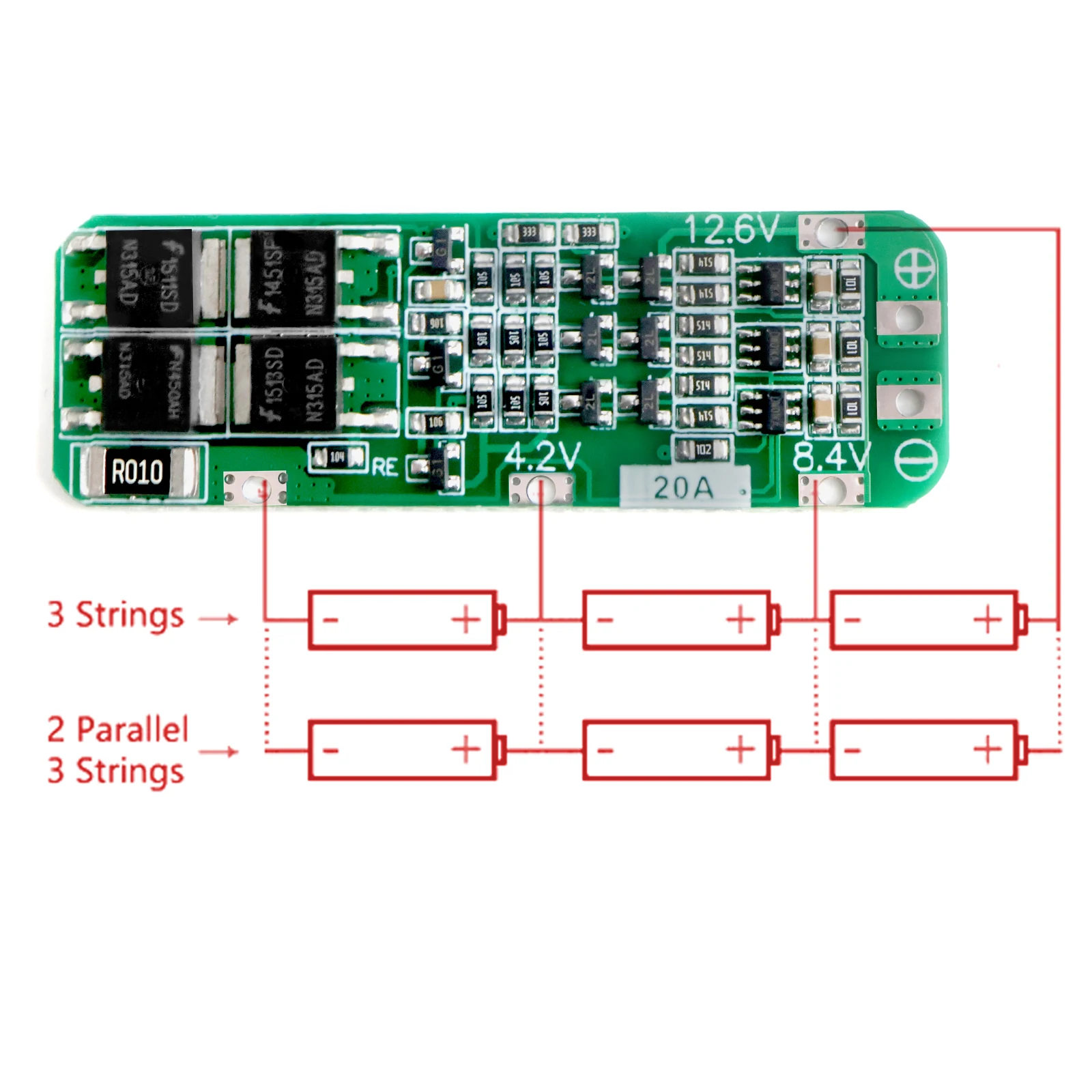
🔹 Wiring Steps (Follow Strictly)
1. Battery pack connection:
B- → pack negative (0V)
B1 → between cell 1 (+) and cell 2 (-) [4.2V]
B2 → between cell 2 (+) and cell 3 (-) [8.4V]
B+ → pack positive (12.6V)
2. Charger connection:
P- → charger negative
P+ → charger positive (12.6V charger only)
3. Load connection:
P- → load negative (drill/motor)
P+ → load positive
⚠️ Polarity warning! Wrong wiring (B-, B1, B2, B+) will instantly burn the board. No warranty for reverse polarity. Double-check before soldering.
🔧 For brushed motors: Add a 10μF-1000μF capacitor across motor terminals to prevent voltage spikes from damaging the MOSFETs.
🔹 Common Questions & Tips
❓ My drill won’t start – BMS has no output. What’s wrong?
First, check if you are using 15C-20C power batteries. Regular 18650s cannot provide the 40A surge current needed. Also make sure wires are thick (≥3mm²) and short. If the battery pack is overdischarged (any cell <2.5V), charge it first.
❓ BMS stops working after a short circuit. How to recover?
Disconnect the load completely. Thanks to Auto Recovery, the BMS will automatically restore output within a few seconds. If it doesn’t, briefly connect a 12.6V charger to reactivate it.
❓ My BMS won’t charge or discharge. Is it broken?
Not necessarily. Measure each cell voltage:
If any cell > 4.25V → overcharge protection active. Discharge that cell slightly.
If any cell < 2.5V → overdischarge protection active. Charge the pack.
If all cells are between 2.7V and 4.2V but still no output, check your wiring. Incorrect B- / B1 / B2 / B+ is the #1 cause.
❓ Why is there no balancing function? Can I add it?
This standard version does not include balancing. It only provides overcharge/overdischarge protection. For cell balancing, you need a separate balance board or choose our “With Balance” version.
❓ Can I use this board with a 4S (14.8V) battery pack?
No. This board is strictly for 3S (11.1V nominal, 12.6V max). Using it on 4S will trigger overvoltage protection immediately or damage the board. Buy the correct S count for your pack.
❓ How do I know if my batteries are good for drill use?
Measure the voltage of each cell under load. If any cell drops below 2.8V instantly when you pull the drill trigger, your batteries are not high-drain enough. Replace with 15C-20C cells.
Package Includes
1 × 3S 20A BMS (Auto Recovery)
Reviews
There are no reviews yet.